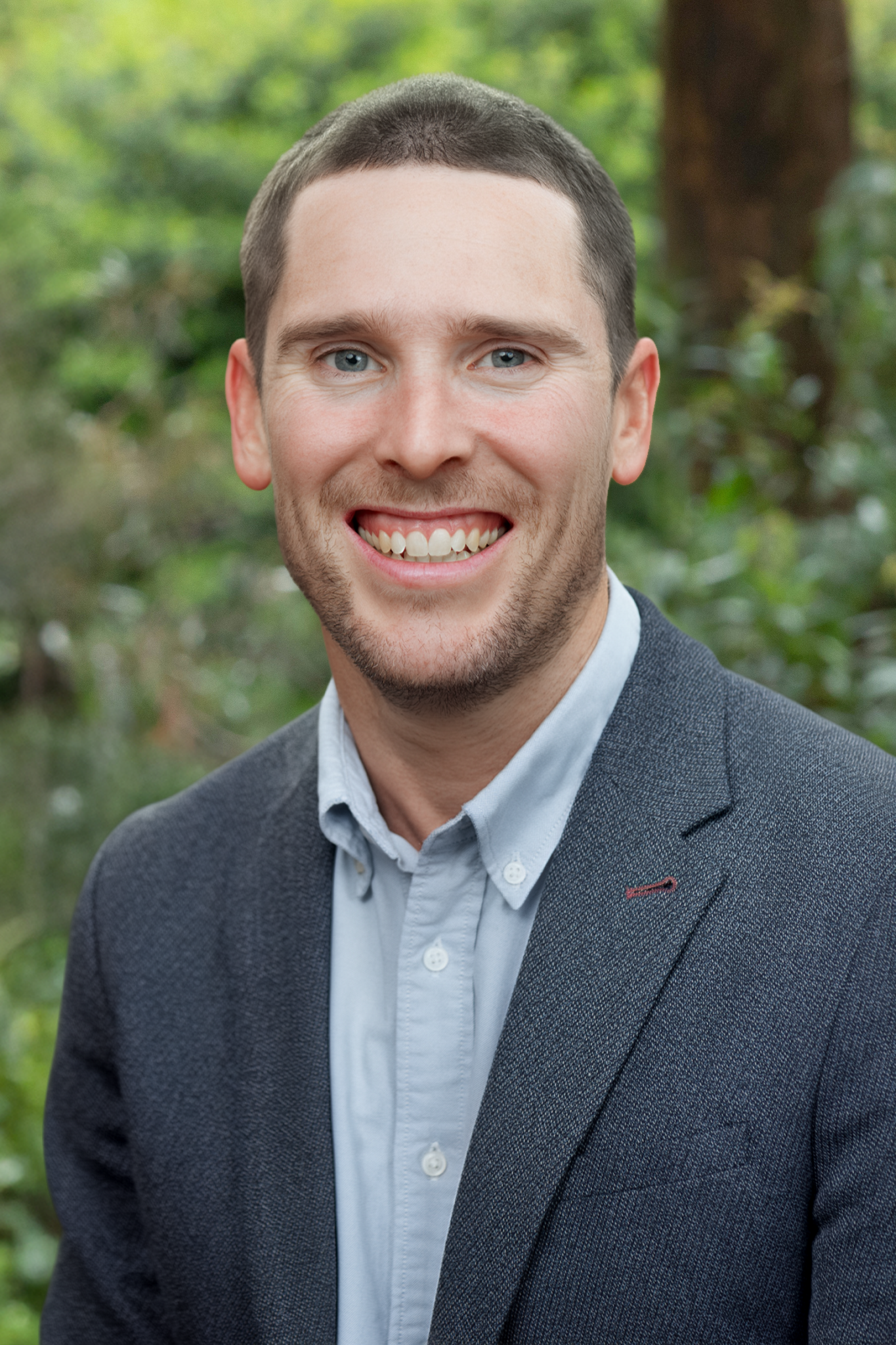
Lessons in resilience from the Top End
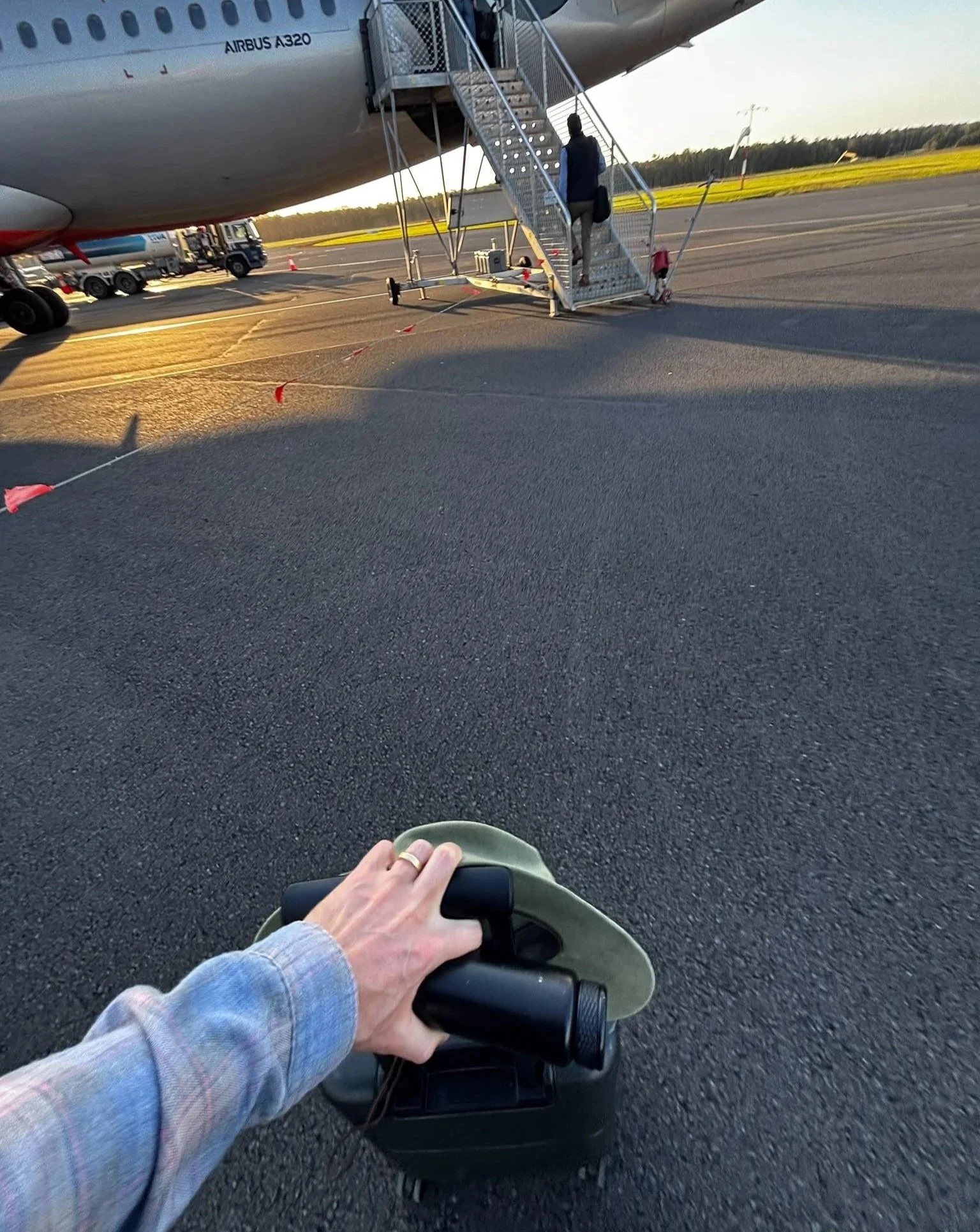
On my way to The Territory. Can't go wrong as long as you've got an Akubra and a bottle of water!
In September I travelled to Darwin for the 2026 Nuffield Australia National Conference, followed by a two-day regional tour of the Top End. I came home with a notebook full of ideas and a much better appreciation of what it takes to farm in northern Australia (read: a lot).
What is Nuffield?
The Nuffield farming scholarships began in the UK in 1947, funded by the foundation Lord Nuffield established a few years earlier. The idea was simple: give some of agriculture's most curious minds the time and means to travel the world and go deep on a single question that matters to their industry. In Australia, scholars spend one to two years on domestic and international travel, including a five-week Global Focus Program with their fellow scholars.
Some remarkable things have come out of the program. One of the best-known examples close to home is John Foss, whose Nuffield research into food trends led him to chia. He went on to found The Chia Co in 2003 and establish an Australian chia industry in the Ord River Valley in the Kimberley.
Selection as a Nuffield Scholar is highly competitive, with applicants assessed at state level before a national panel chooses each year's scholars, so the calibre of people in alumni is exceptional.
The conference
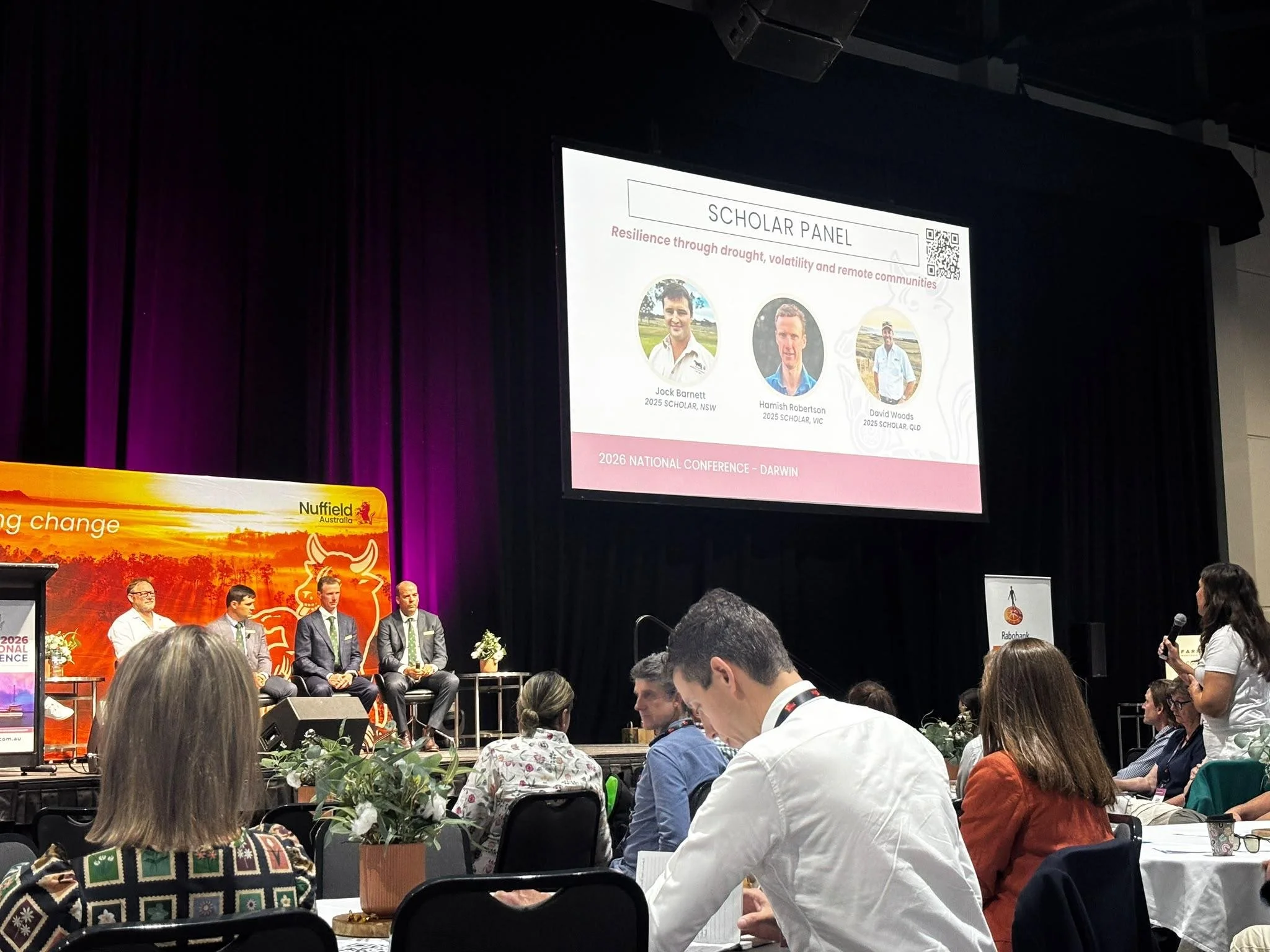
An engaged group - not a single person on their mobile phone throughout the presentations
The National Conference is the main annual meeting point for alumni, where over three days, returning scholars presented their findings in short, TED-style talks, and the 2027 scholars were announced.
The breadth of presentations and speakers was remarkable. Topics ranged from agroforestry, to value-adding through small cottage industries such as lychees, to the challenges facing senior leaders in large agribusinesses. Connecting them all was the depth that the scholarship supports: each speaker had spent up to two years working through a single problem. I arrived a little bit late on day two of the panel discussions, and within the first hour, I was literally reduced to tears as I listened to one scholar's recount of his work in the mental health space. That's when I realised it was going to be a slightly different two days to most ag industry gatherings!
Into the Territory
After the conference, we hit the road. The Northern Territory, or "the Territory" as I quickly learnt to call it, is a place where you’ll want a local guide. Over two days we visited Han Mangoes, NT Turf, an organic veggie farm, Crocodylus Park with Dr Graeme Webb, the live export cattle yards and Northern Stockwater's tank and pipe manufacturing facility.
We finished at the Noonamah Pub, my new favourite watering hole. We arrived undramatically by bus, but next time I plan to come by chopper: it is a stop on the Top End's helicopter pub crawl, and there was literally a queue of helicopters in the air waiting to land.
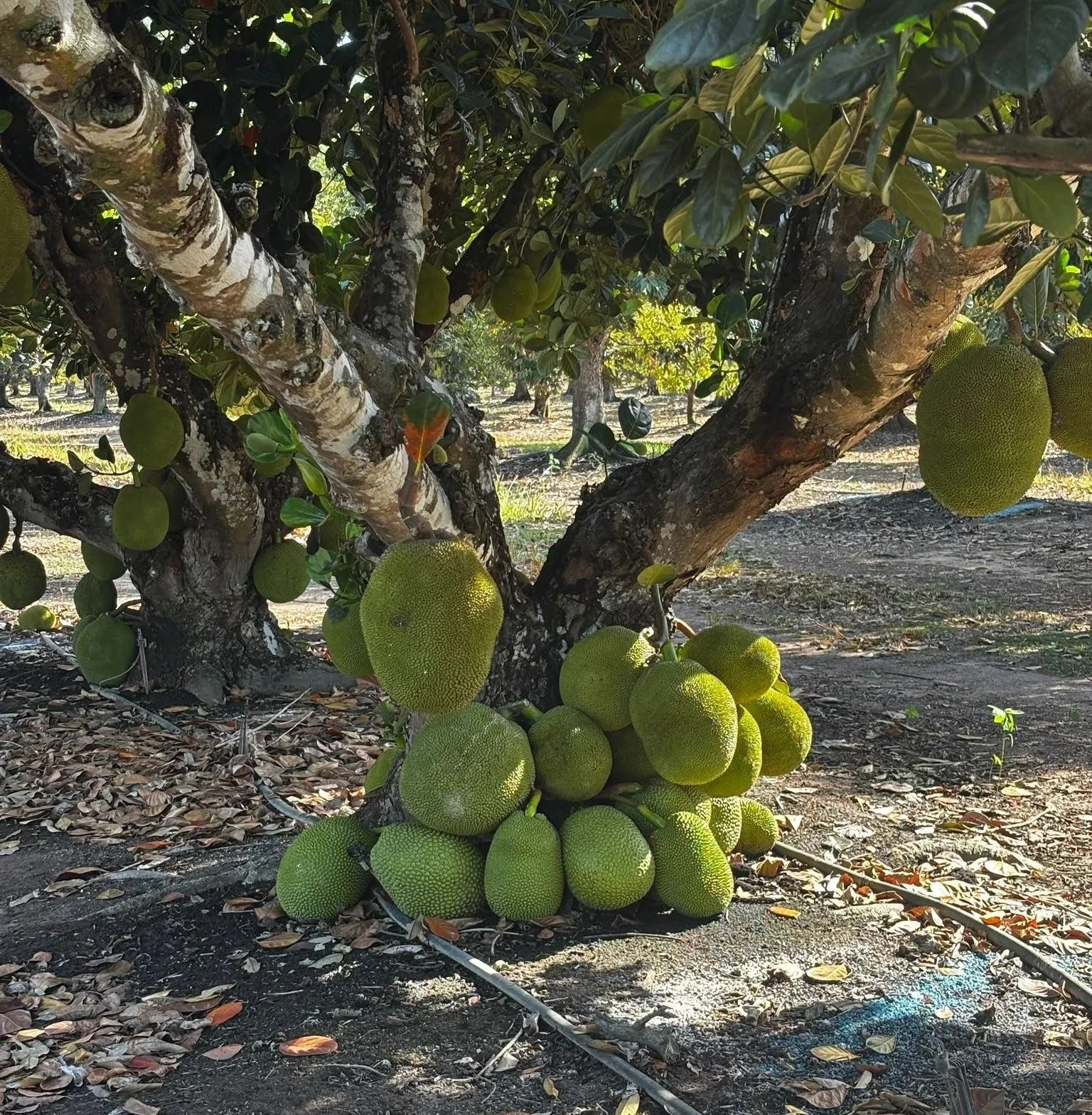
Who knew that jackfruits grew at the bottom of a tree?
Humpty Doo Barramundi: building resilience into every fix
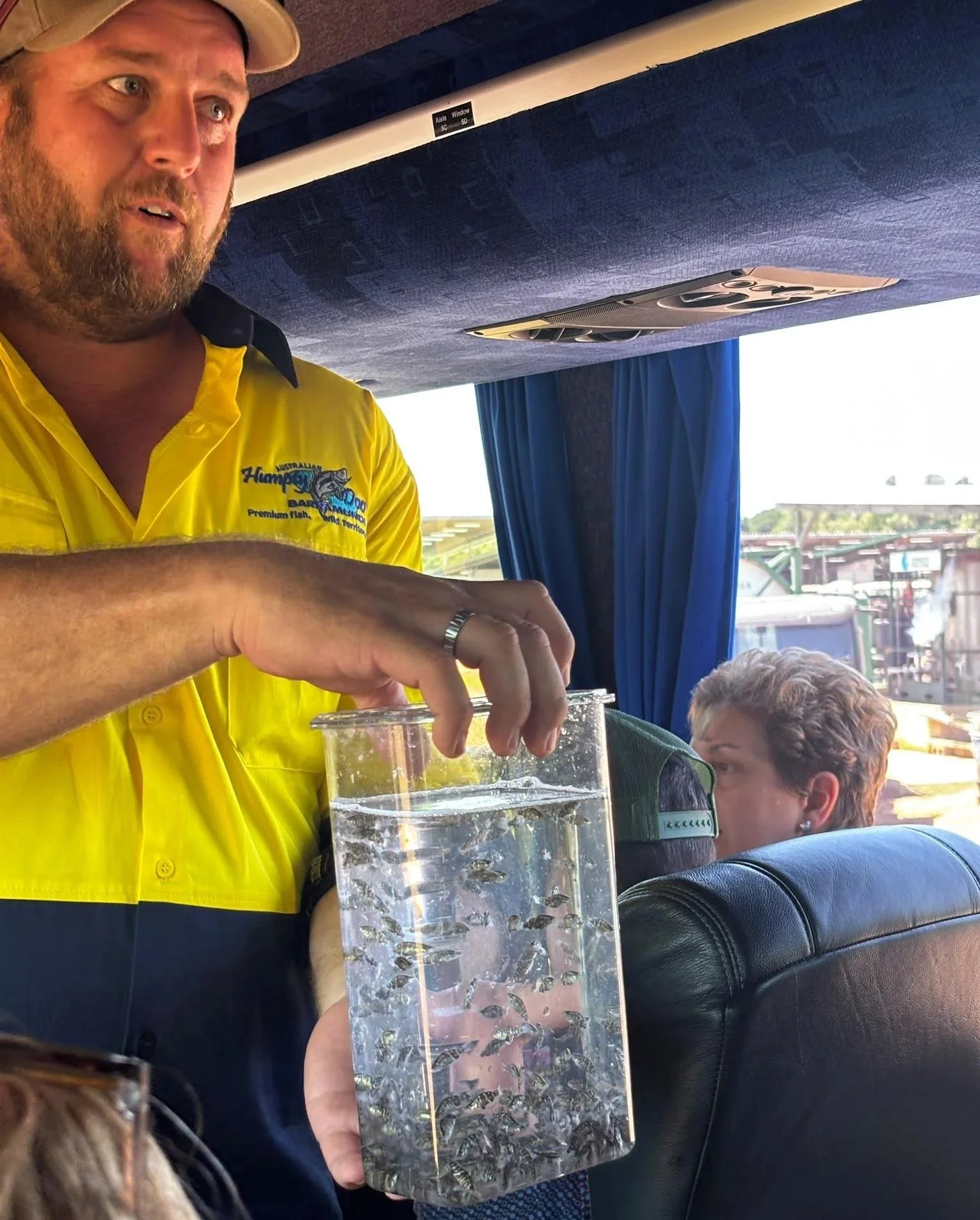
Baby barramundi from the Humpty Doo hatchery
The highlight for me was Humpty Doo Barramundi, an operation I had hear about and wanted to see for years. About an hour from Darwin, it is Australia's largest barramundi farm. CEO Dan Richards and his father started it in the early 1990s, supplying around six kilograms of fish a week to Darwin restaurants. Today it has a team of around 150 and sends more than 130 tonnes of fish a week to customers across the country.
Every fish starts life in the hatchery. The water has to be salt, the tiny fish have to be protected from birds and other predators, and they are closely monitored and fed a specialised diet. Once they become small, stripy juveniles, they move to an enclosed nursery pond to grow stronger, and from there out into the main ponds. Out there, the big job is keeping dissolved oxygen high enough for the fish to breathe.
What impressed me most was how the farm works with its environment. Rather than relying on the big, energy-intensive filters that most aquaculture operations use, they have built an artificially enhanced wetland: more than 20 kilometres of reed-filled channels winding around the property. Water filters slowly back through the reeds, which also provide habitat for nesting birds and support a whole ecosystem. Apart from a once-a-year release into the river, no water comes in or goes out.
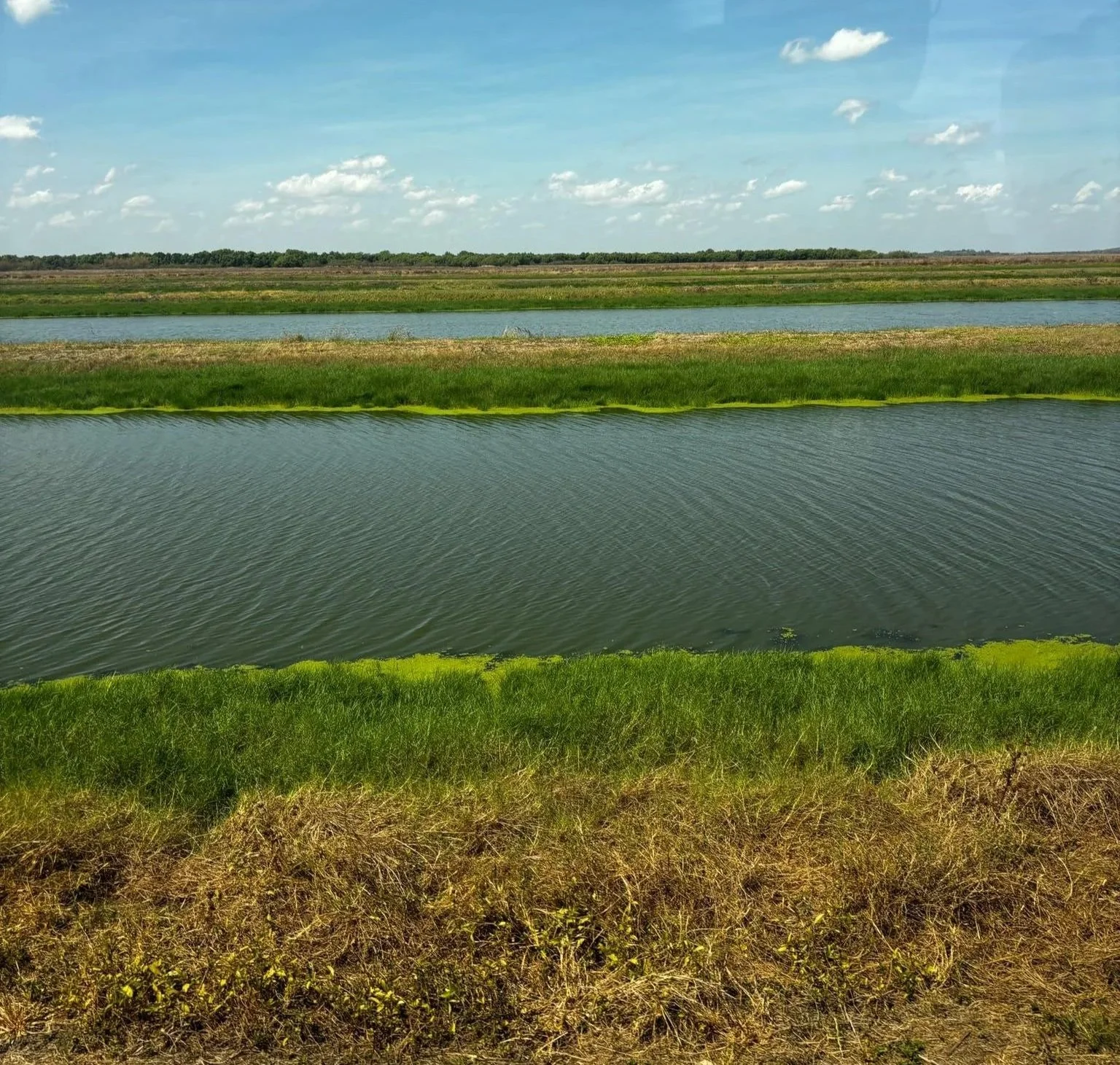
Finally seeing the amazing artificially enhanced wetland I'd heard so much about over the years
None of it has been easy, because every input is hard. Labour is difficult to find. Producing ice (to keep feed and food fresh) is a project in itself: the farm desalinates and purifies bore water to make its own, producing more ice than the city of Darwin, according to the team. Floods can cut off road access, so the farm holds around eight weeks of feed on site, and in that humidity, keeping it from going mouldy is another problem to solve. Somewhere along the line, almost every part of the operation has faced a catastrophe.
Dan's philosophy is to over-invest in every problem he solves, so each fix removes a future bottleneck and builds resilience rather than simply getting the business through the next crisis. That approach was born of necessity. For years the business bootstrapped its growth because banks would not lend: it sits in a cyclone zone and was producing a product whose market it was largely building itself. A $30m loan from the Northern Australia Infrastructure Facility (NAIF) eventually allowed it to scale up and upgrade infrastructure that had been playing catch-up.
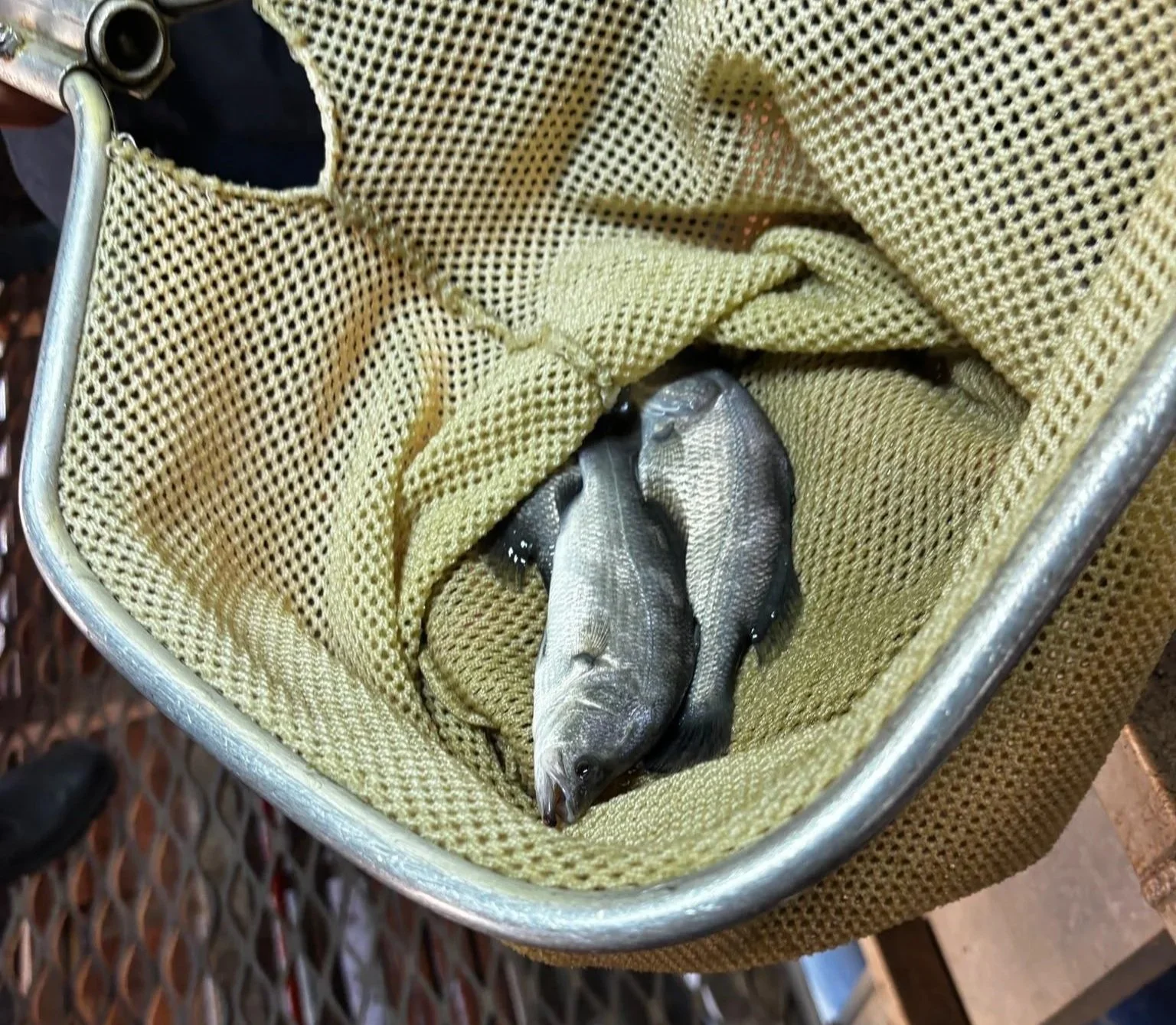
A couple of juvenile baramundi
The other side of the story
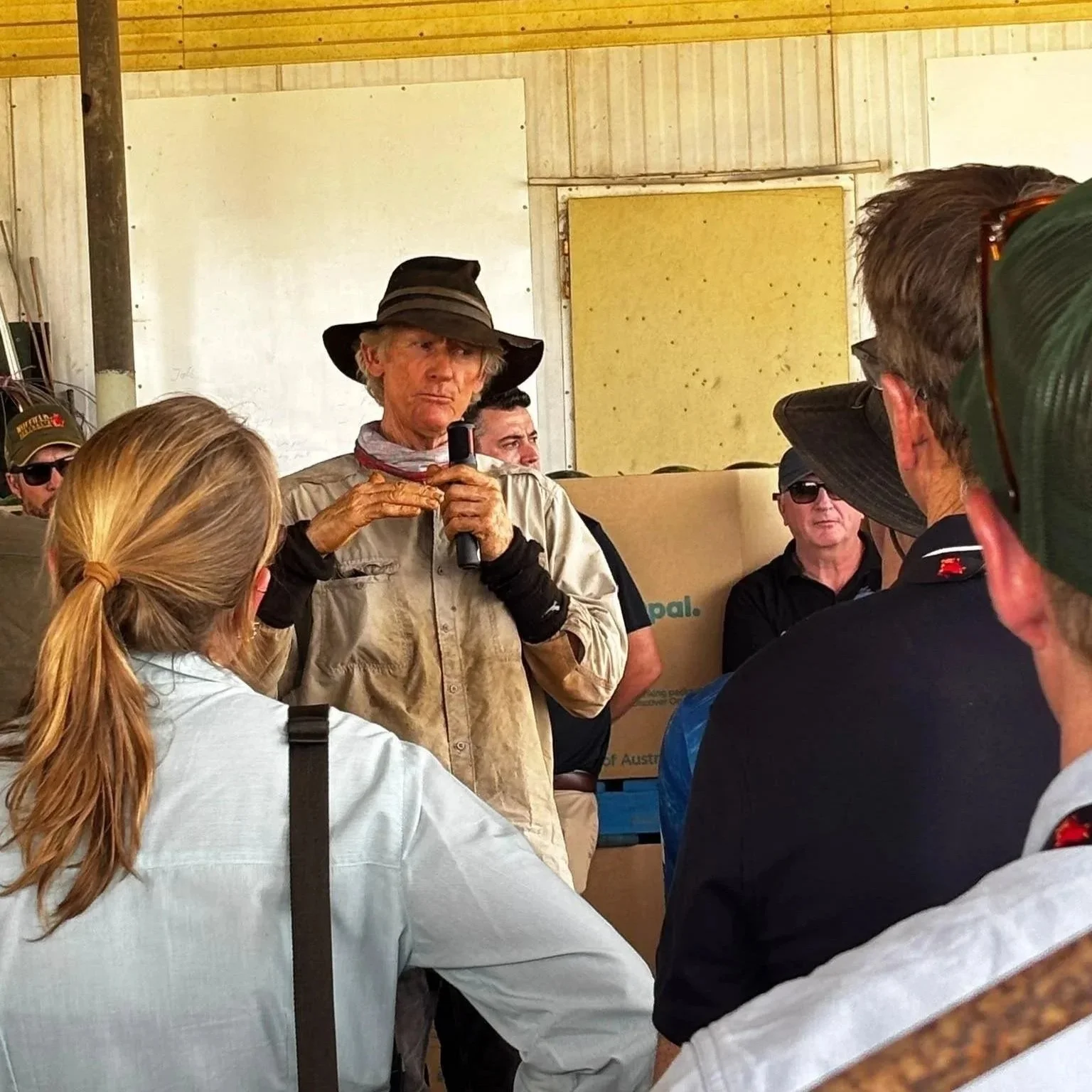
Luke the organic veggie grower, telling us the highs and lows of his entrepreneurial farming journey
We also met Luke, a pioneering organic grower who helped lead the organics movement in the Top End in the early 1990s. At his peak he ran a large operation spanning several properties across Katherine and the top end. He told his story of having multiple investment properties and kids in private school, and working his dream job scaling up organic agriculture and bringing his philosophy to a new region with unlimited growth potential. His story took a turn when a disease he could not control within his organic system wiped him out. Today he farms a small plot with one helper, still determined to crack organic production in the tropics.
Hearing his story after Humpty Doo was sobering. Two skilled, committed operators in the same region, with very different outcomes. Both had a big vision, a big ambition, and a high risk appetite but the contrast between them shows how fragile farming systems in general can be, and how much resilience depends on our ability to predict and respond to nature.
I left Darwin inspired, and with one thing that really stayed with me is that if shaping the future of agriculture is the single biggest opportunity to have a positive impact on the world in our lifetime, then curiosity is the enabler. Nuffield brings together people who have spent years thinking hard about one problem, but are somehow able to also stay curious about and open to a very broad depth of ideas and perspectives. That combination is rare, and its what I have always called ‘T Shaped People’. The Nuffield community has that in spades. It is incredibly inspiring to be around and a potent combination for those working to move agriculture forward.
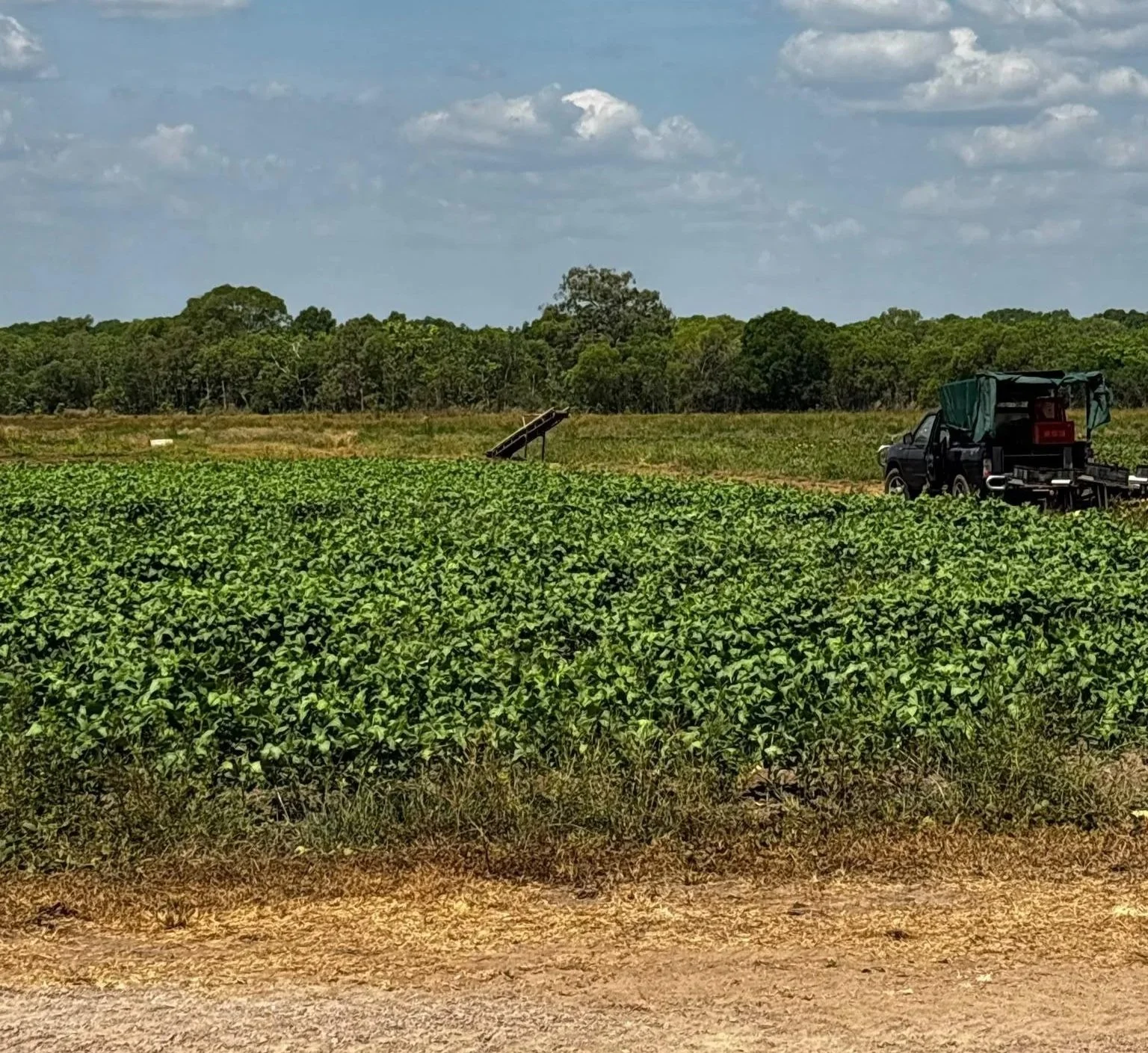
Organic veggies on Luke’s farm