
Our once in a decade opportunity to reform Australia’s R&D ecosystem
Two weeks ago, the panel behind Ambitious Australia released its final report for the Strategic Examination of Research and Development in Australia. Congratulations to Robyn Denholm, Ian Chubb, Fiona Wood, and Kate Cornick for their work. The review calls for bold reform in our RD&E system, naming risk aversion, incremental thinking, fragmented governance and a persistent failure to translate world-class research into world-class ventures. Coincidently, the week this review was released, I was speaking at the ABARES conference in Canberra in a panel discussing the crucial role of agritech innovation in stemming the backslide of agricultural productivity growth.
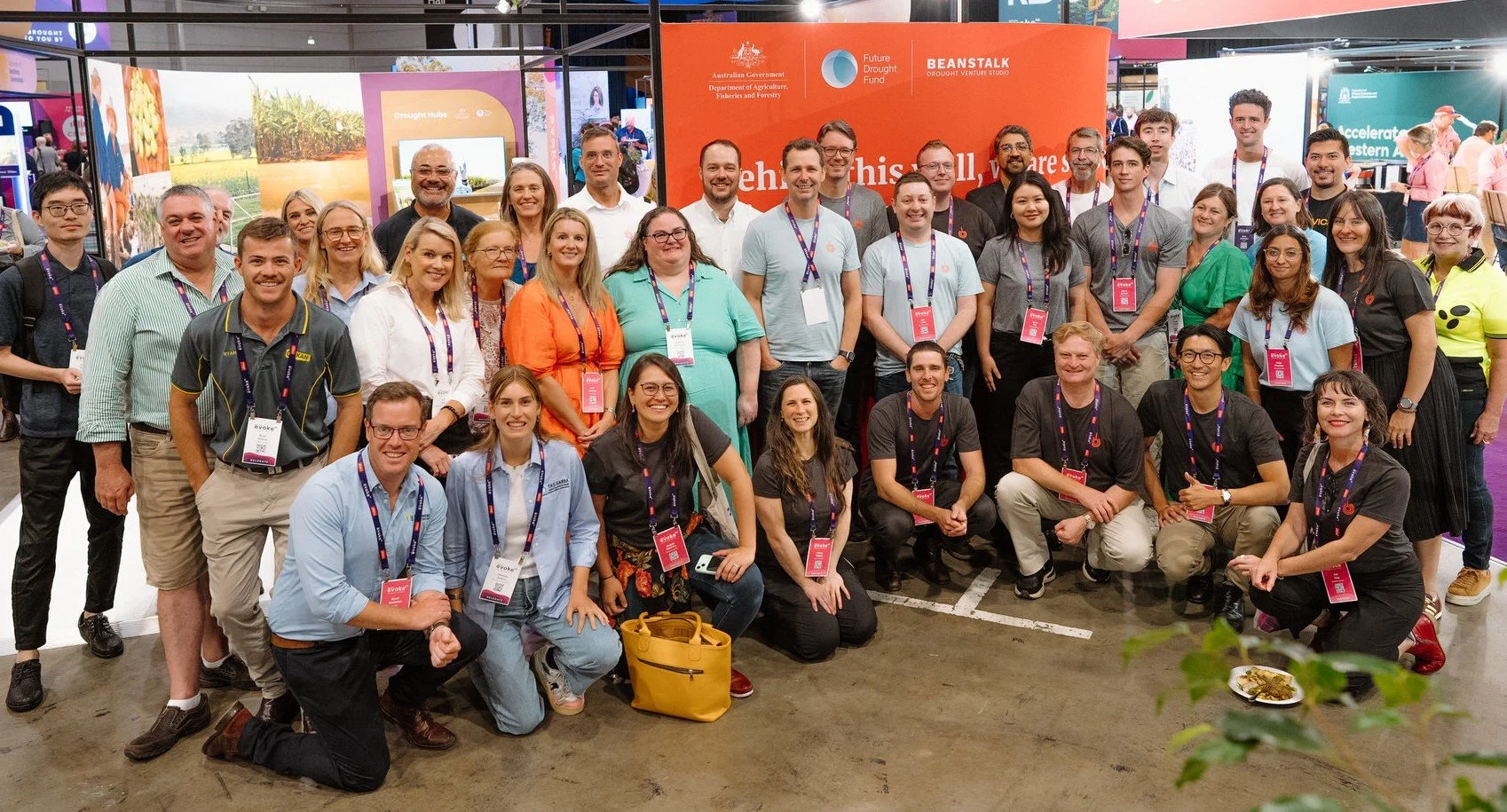
At Beanstalk AgTech , we made a submission to this review. We've spent nearly a decade watching the same structural problems play out in the agritech sector, and the last two years delivering Australia’s first ever agtech venture studio focused on drought resilience. We documented the lived experience from the Drought Venture Studio, working with 19 Australian research organisations, more than 84 founding teams, and dozens of researchers trying to navigate the gap between a discovery and a company. The Drought Venture Studio portfolio secured 21 field trials, produced 15 market ready products, supported 8 univserity spin-outs and raised a collective $11.4 m in external funding; but without support from programs like ours, researchers going it alone are rarely as successful. Despite ecosystems of willing extension partners, grower groups, Innovation Hubs and forward thinking farmers, the valley of death isn't just a metaphor here; it's a timeline, a term sheet, or a conversation about who actually owns the IP.
We called for Agriculture & Food to be treated as a genuine national priority. The report names it as one of only six National Innovation Pillars. It means a long-term mandate, dedicated governance, and for the first time, a structural home for agtech commercialisation within Australia's R&D architecture.
We called for a formal national coordination body with sufficient authority to drive coordinated RD&I action across portfolios. Recommendation 1a for a National Innovation Council delivers exactly that.
We called for researcher career pathways that make it possible for scientists to spend time in industry without sacrificing their academic futures. The report's endorsement of industry sabbaticals modelled on Canada's Mitacs program is the kind of structural change that shifts culture over time.
There is more to do.
Australia's patent filing rates remain low, because there is no meaningful incentive to file and no clear pathway for assigning that IP to an Australian company that can commercialise it. This was not addressed in the final recommendations. We think that decision deserves to be revisited, and we'll keep making the case - especially Deon Goosen who earned the nickname “The IP Godfather” within Beanstalk.
We now await the government’s response; a National Innovation Council or an Agriculture & Food Pillar hasn't been formed yet. That means the window to shape what this reform actually looks like in practice is open right now, but it won't stay open indefinitely.
I'm genuinely interested in connecting with others who are thinking seriously about what an Agriculture & Food Pillar should prioritise, how NSI commercialisation activities should be designed (considering agriculture and research commercialisation timelines), and how we avoid the familiar pattern of good policy being diluted in implementation.
If that's a conversation you're having in government, in research, in industry; the team and I at Beanstalk would welcome the chance to be part of it.
#AmbitiousAustralia #AgTech #SERD #AustralianInnovation #RDI #AgriFood #Commercialisation #NationalInnovationPillars