
2024 Year in Review: Building Blocks of the Drought Venture Studio
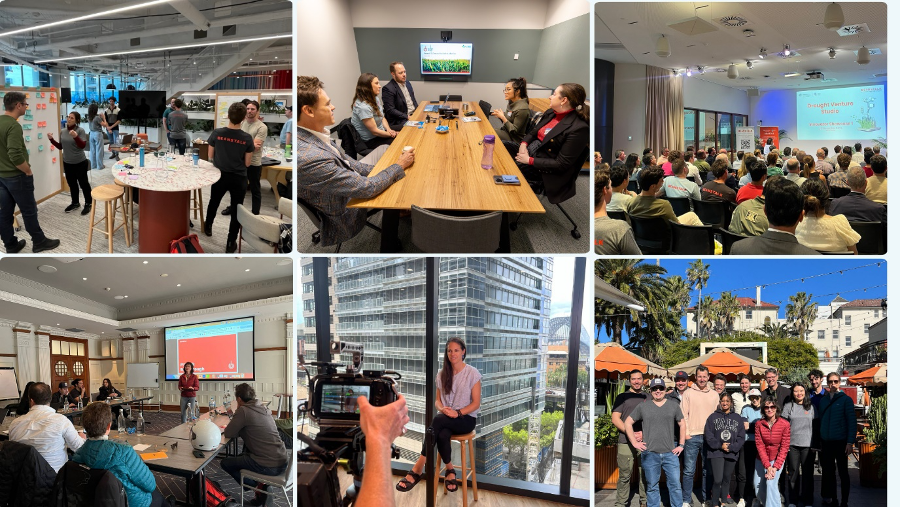
2024 has been a big year for the entire APAC agtech ecosystem and a massive year for the Beanstalk Team.
From launching the world’s first Drought Venture Studio, assembling Australia’s largest agtech-focused team and providing transformational support to almost 50 innovators in the program. 2024 has been a year of growth and learning.
With our second cohort of innovators well underway, we wanted to take a moment to reflect on the year that’s been for Beanstalk.
This year has reaffirmed Australia’s enormous potential to be a global leader in new agtech. While the past 12 months weren’t without challenges, the lessons learnt, innovators supported, and ecosystem partnerships built make us more excited than ever about the power of the venture studios in agtech.
The Year in Numbers
350+ Expressions of Interest lodged: Interest in our program came from every state and territory of the country, and from rural and regional Australia, not just the capital cities.
160+ applications received: The diversity of Australian research was evident, with an enormous range of technologies and innovations represented.
500+ hours mentoring delivered: Tailored one-on-one problem-solving sessions with experienced, veteran Venture Builders to help innovators de-risk their ventures and take the leap into commercialisation.
48 Innovators in our 90-day (Phase 1) Program: So far, the graduation rate has been over 95%, with overwhelmingly positive feedback from our innovators in the calibre of our Phase 1 program.
17 Innovators from 11 public research institutions: A significant proportion of the cohort came from some of Australia’s leading research institutions.
37 Investors engaged: From Sydney, Melbourne, Brisbane and Singapore, we’re excited to continue to invest in our investors, bringing them along on the journey of what a venture studio means for high-quality agtech deal flow.
The 90-Day Program: Rapid Commercialisation Sprint
The 90-day program was a transformative experience for many innovators, blending structured support with practical, hands-on learning from experienced agtech entrepreneurs. There are a number of elements that we believe make for a highly impactful delivery model:
Pitch, pitch, pitch: For deep tech experts who are technically brilliant in their area of expertise, the ability to communicate the commercial value of their IP to the world is critical. The pitch is not only for communicating to prospective investors and customers, but also acts as a live document to capture refinement in strategy and value proposition in an iterative and practical way.
Content vs mentorship: The studio continues to refine its delivery model that combines a structured program of content that covers the basics of commercialisation and startup science and leverages this platform and shared language with highly bespoke 1:1 mentoring sessions with experienced venture builders.
Partners: The involvement of growers, corporate agribusiness and agtech investor partners gave innovators a better understanding of the challenges and opportunities of building a sustainable business. Often, the messenger is more important than the message when our innovators are building a mental model of the commercial operating environment they are launching into.
Honesty and encouragement: We have two important and conflicting roles as a studio supporting early-stage technical founders. On the one hand, we are their #1 fan and source of encouragement and confidence to launch a new company, often for the first time. This must be countered with a strong dose of realism and candour to confront the brutal facts of reality, often within the same coaching session.
We believe these elements combined to create an honest but supportive environment to help our Innovators make strides on their commercialisation journey as they work to shape the future of drought and climate change resilient farming. From the studio perspective, when we truly step into the weeds to support all our innovators during Phase 1, we gain a valuable picture of the innovators that we believe are ready to progress through Phase 2 and launch into the commercial arena in the next 12 months.
Beanstalk’s first 4 Venture Studio Startups
We are thrilled to introduce four standout innovators form Cohort 1 that are advancing to Phase 2 of our program:
Caecilia Potter (VensoGrow): Improved seed treatment technology to improve seed resilience to abiotic and biotic stress.
Chris Lucani (Cavicam): Superior plant monitoring tools for real-time irrigation optimisation, enhancing fruit quality and taste.
Nick Johnston (Aquifa): A water trading compliance platform to ensure efficient resource allocation where it’s needed most.
Evgeny Sagulenko (Darts Biotech): A biological solution to produce mould-free silage for safer, more nutritious fodder.
Honourable mentions:
The other finalists also displayed incredible potential for drought impact:
Angus Croser (Ag SafeGuard): A farmer-led innovation that protects pivot sprinkler heads from damage, enabling pivots to irrigate (and fertigate) closer to the ground for maximum water efficiency.
Darryl Lyons (Rainstick): Indigenous knowledge blended with modern bioelectric technology to boost seed germination, vigour and biomass.
Edward Barraclough (Drone-Hand): Enhanced real-time livestock condition monitoring to ensure safety, productivity, and security through drone technology.
Lachlan Vogt (AIgorithm): An AI tool utilising geospatial data to help financial institutions and the supply chain better understand climate risk and resilience around rural properties.
What's ahead?
As we reflect on 2024, it’s clear we’ve only scratched the surface of what’s possible within the Australian agtech sector. The year ahead promises new challenges, bigger opportunities, and continued momentum as we work to refine our venture studio model based on our wins and learnings from the year. One thing will remain unchanged: our resolve to continue innovating our delivery model to reshape agriculture for a more sustainable, resilient future.